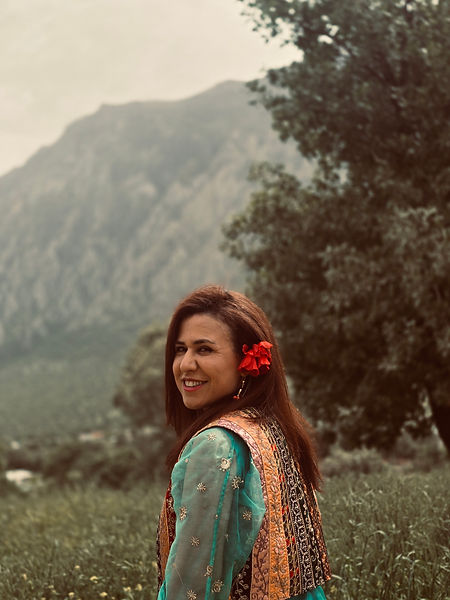
Bnar Sardar is a Kurdish photographer, artist, and documentary filmmaker. She was born in Kurdistan and was forced to migrate to Iran with her family at the age of seven in 1991. Growing up as a refugee, she developed an early attraction for photography. But what genuinely changed her course was the realisation that the men recounted most of the stories in the war-torn nation from which she came. She noticed what was lacking, which sparked her decision to convert her love into a career.
She has photographed in crisis zones throughout Iraq, including the fighting in Mosul, capturing the horrors of war with empathy and courage.
In 2009, she started working with Metrography, Iraq's first independent photography firm. Their purpose, to establish a diverse and inclusive photography business in Iraq, mirrored her own goal: to challenge preconceptions, chronicle untold experiences, and raise the voices of women, children, and communities affected by violence.
In 2018, she moved to the United Kingdom. She began studying documentary photography at the University of South Wales in 2022. This academic journey has helped her refine her approach to combining photography, film, and visual art to create human-centred stories.
Now, she is based in Bristol and works as a freelance photographer and contributor to the National Media League. She has exhibited her work in the United Kingdom, Norway, the Netherlands, the Czech Republic, Slovenia, Egypt, Turkey, and Pakistan. In 2019, the UNHCR picked her as a Middle Eastern photojournalist for a major exhibition in Venice, Italy. She also received a bronze prize in Egypt for a dramatic shot that addressed the subject of female genital mutilation.
Being a refugee—twice—has influenced everything she does.
"We are in the middle of a humanitarian crisis in my country, and I want to help deliver this message to the world."
This experience enables her to form intimate bonds with the people she pictures. When she encounters refugees, women, or children in need, she informs them that she has been where they are. This builds trust and promotes equality. She listens to their tales and records them with dignity, not detachment.
International organisations& Collaborations
UNICEF, Photography Trainer, Yazidi Girls Photography Project, 2015
UN Women, Photographer 2012
Hivos, Visual Documentation Project, Female Genital Mutilation Awareness Campaign